

The Month in Reuse: Wales Gets the Green Light for its DRS
27 February 2026
If there is one moment this month that redefines what's possible for reuse in the UK, it is this: Wales has secured an exemption from the UK Internal Market Act and laid the regulations for a national Digital Deposit Return Scheme with glass included and reuse explicitly built in from the outset.
That is not a consultation outcome. That is not a policy aspiration. That is legislation.
Here is the story of how we got there, and what it means for your business right now.
Wales Moves First And It Matters for Everyone
For months, the question hanging over Wales' Digital DRS was whether the UK Internal Market Act would force the scheme to align downward: stripping out glass and abandoning reuse.
That risk is now resolved. Wales has secured its exemption. The scheme launches on 1 October 2027, covering metal cans, plastic bottles and glass, with a clear pathway to mandatory reuse targets from 2031 and further milestones through 2035 and 2040.
This is significant not just for Wales but for every producer, retailer, waste contractor and government body operating across the UK. Wales has demonstrated that a nation can go further on environmental standards without being blocked by trade rules. That precedent matters enormously as other nations and regions weigh up their own ambitions.
The IMA question that has preoccupied policymakers and industry alike for the past year asked whether environmental policy would always need an exemption to survive. Wales' answer is instructive: push for the exemption, design for circularity and don't settle for a system built around what's easiest to agree on.
What Wales Is Actually Building
Wales is not designing a basic deposit scheme. It is building infrastructure for the circular economy it actually wants to see.
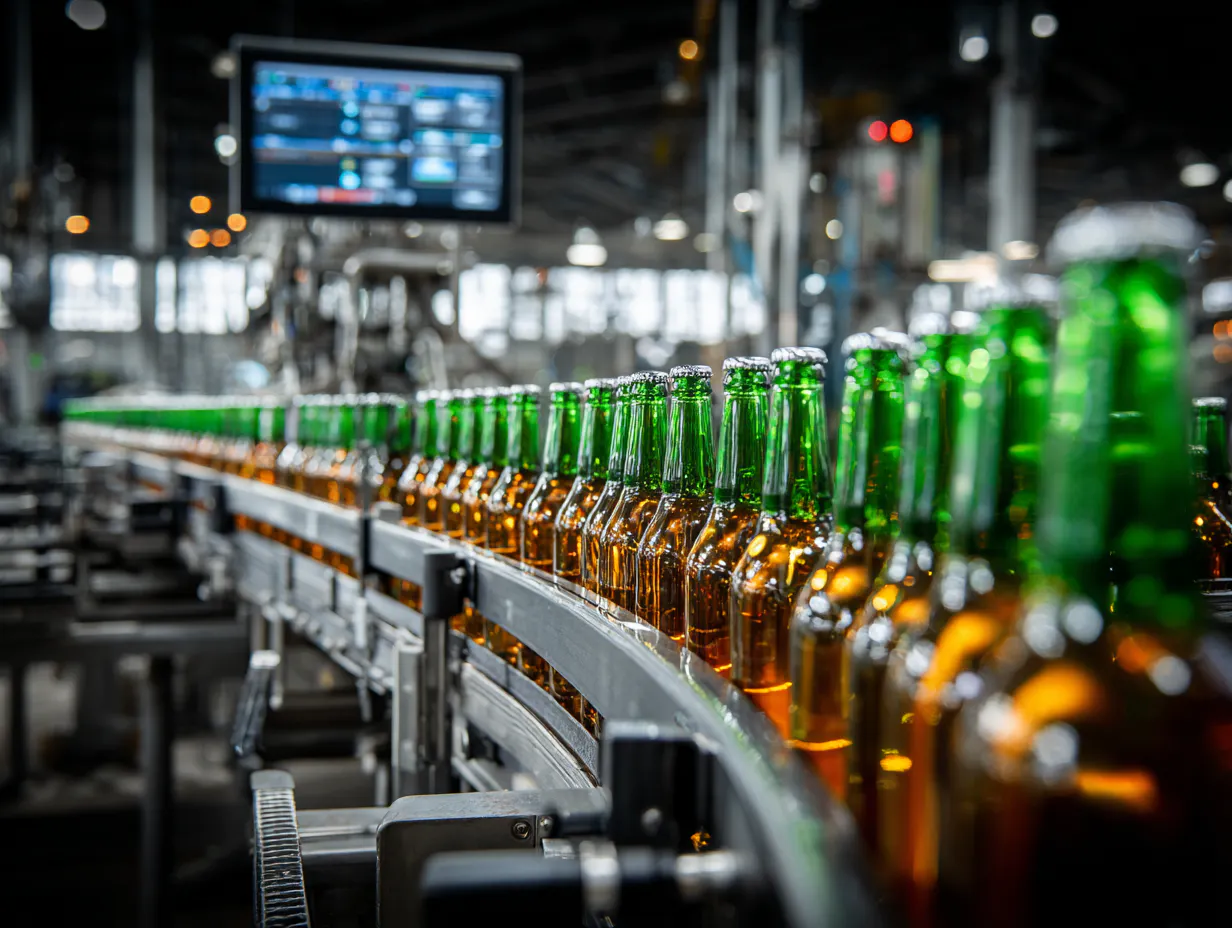
The Digital DRS will use QR codes and 2D barcodes as the standard for container identification across the system, enabling real-time tracking of deposits and returns. Multiple verified return pathways, through Reverse Vending Machines and kerbside collections, reduce friction for consumers while improving return rates for producers and compliance schemes alike.
Reuse targets from 2031 mean that for the first time in the UK, reuse is not voluntary. It is a legal obligation with a defined timetable. For major F&B businesses, this means infrastructure decisions, supply chain obligations and financial exposure that need to be understood now, not in 2027.
Glass is a critical part of this. It is highly suited to closed-loop reuse systems, retaining quality across multiple uses, and including it in the scheme means Wales is building something that does not just collect, but circulates. That distinction is fundamental.
The IMA: When Environmental Policy Meets Trade Law
Understanding why the IMA exemption matters requires understanding what the Act was designed to do. Created post-Brexit to ensure the UK functions as a single market, the IMA means that products legally sold in one nation must generally be allowed in all four. On paper, that protects businesses. In practice, it can mean that higher environmental standards in one nation are treated as trade barriers and flattened accordingly.
Wales had not changed its position on DRS scope. It had always planned for full scope: glass, reuse and digital infrastructure. What changed was the risk that without an exemption, its ambitions would be overridden by the market access rules designed for an entirely different purpose.
The question this episode of policy history leaves for governments across the UK is whether the IMA should evolve to recognise that nations should be permitted and supported to go further on environmental standards, not just meet the minimum acceptable to all parties. Wales' exemption is a precedent. How it is used will matter.

Wales Is Also Consulting on EPR for On-the-Go Packaging
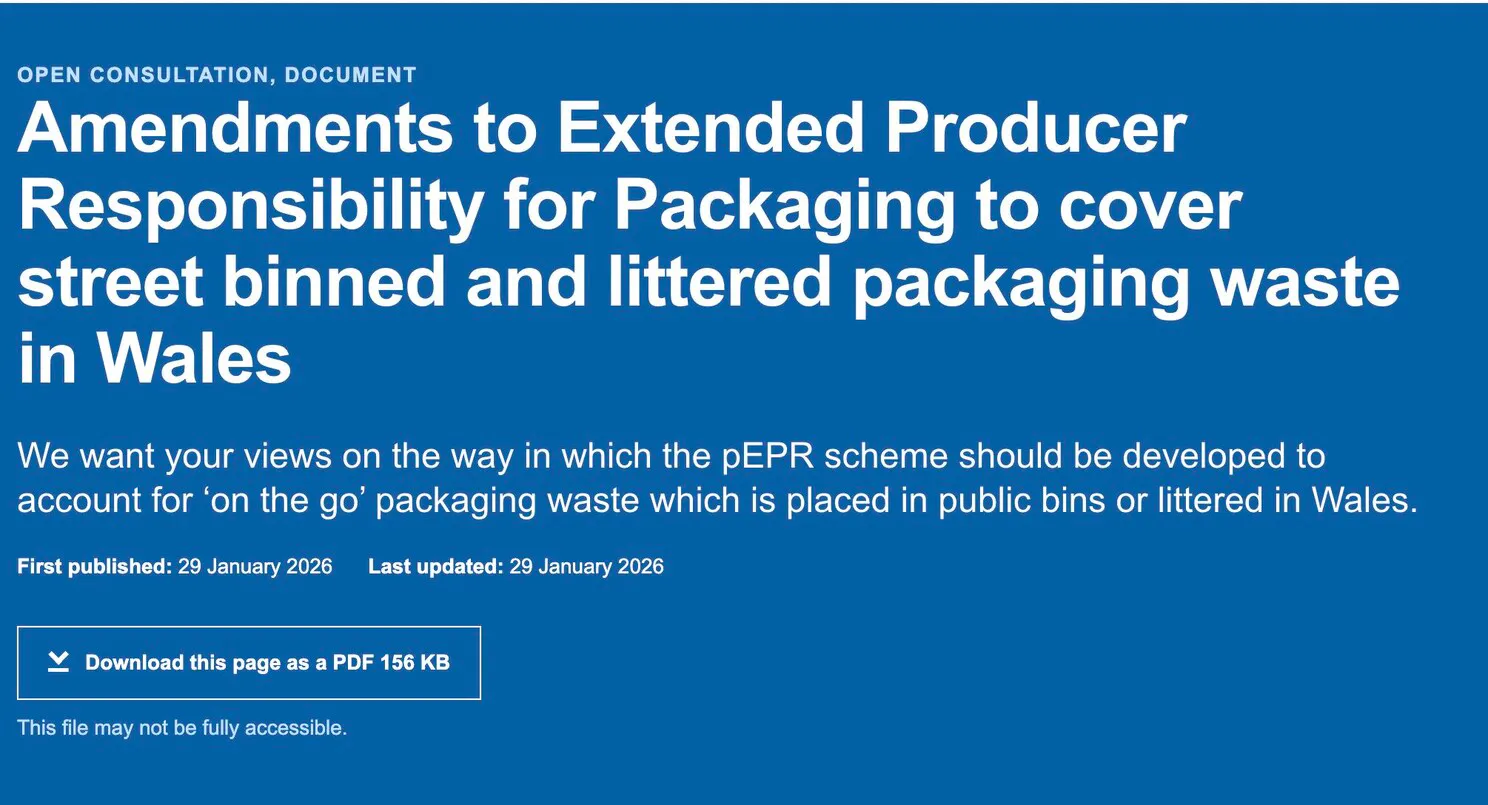
Alongside the DRS regulations, the Welsh Government has opened a separate consultation on expanding Extended Producer Responsibility to cover on-the-go packaging, that which ends up in public bins or littered in the environment.
The scale of the problem is clear: packaging accounts for roughly two thirds of litter by item count in Wales. Local authorities currently absorb most of those management costs, and collecting littered packaging is significantly more expensive per tonne than kerbside recycling.
Three options are on the table: a flat fee across all packaging producers; targeted fees for commonly littered items; or a hybrid combining both approaches. Estimated costs run to £15–16 million per year in Wales, with changes expected no earlier than 2027–28.
This consultation reinforces the same principle that underpins the Digital DRS: the polluter pays, across the full lifecycle of packaging placed on the market. For brands and producers, this is a material signal. The direction of travel on producer responsibility is not slowing. It is accelerating.
The consultation closes 24 April 2026. This is a moment to engage.
Reuse in the Workplace: The ISS Partnership
While policy has dominated this month's conversation, real-world delivery has continued at scale. ISS A/S has rolled out the CLUBZERØ Reuse System across multiple cafés and lunch destinations in a major London bank, removing single-use plastic from everyday food service at high footfall. The results in just a few months are tangible:
- 48,500+ reusable packaging items served
- 97,120+ single-use items diverted from landfill
- 1,456 kg CO₂eq removed from the atmosphere
- 874 kg of packaging waste avoided
What these numbers reflect is a system designed for operational reality: intuitive to adopt, unobtrusive to run and consistent enough that teams actually embrace it. The design of packaging and drop points has been central to that adoption. Reuse that adds friction fails. Reuse that removes it scales.
This partnership demonstrates something important for the F&B and workplace foodservice sector: circular systems can deliver measurable impact at scale when sustainability is designed in, not bolted on.

Are You Reuse Ready?
The Welsh DRS is not an isolated policy development. It sits alongside pEPR, rising waste costs and binding EU targets that are already reshaping packaging, supply chains and operational costs across the sector. The direction of travel is consistent across markets. The question for most businesses is not whether reuse will become mandatory, it is whether they will be prepared when it does.
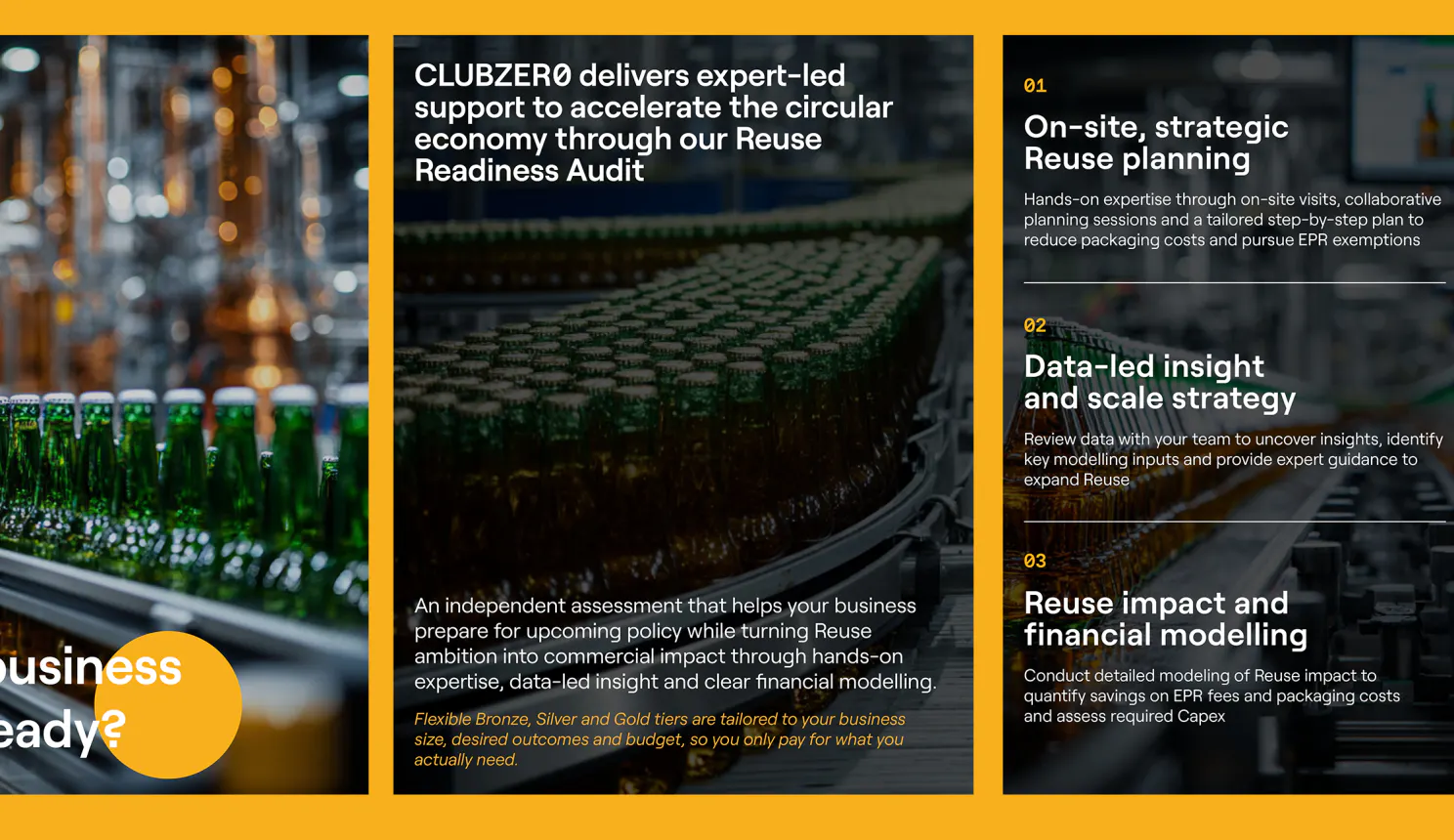
We have built the CLUBZERØ Reuse Readiness Audit specifically for this transition. We model the real financial impact of reuse on pEPR fees and packaging costs, conduct on-site visits, review data and produce a tailored implementation roadmap. Critically, this is completely independent of whether you choose CLUBZERØ's reuse system. It is about giving you the numbers so you can make an informed decision.
Email hello@clubzero.co to learn more about our Reuse Readiness Audit.
Recognition: Safia Qureshi Nominated for Women in Packaging Excellence Awards 2026
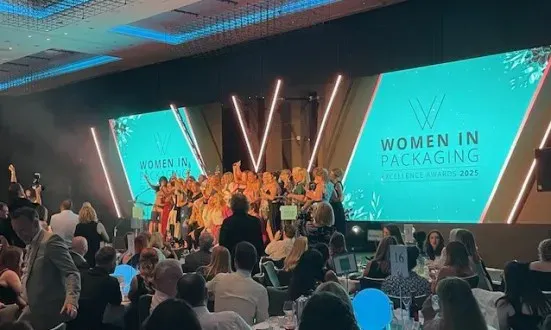
This month we were proud to share that Safia Qureshi, Founder and CEO of CLUBZERØ, has been nominated for the Women in Packaging Excellence Awards 2026, the second consecutive year CLUBZERØ has been recognised, following a Highly Commended result in the Sustainability Champion Award last year.
Recognition of this kind reflects not just individual leadership but the broader work of building systems that others said could not scale. It is a reminder that the reuse economy is being built by people who were prepared to work on it before it was inevitable.
The Big Takeaway
Wales has moved from ambition to legislation. A Digital DRS with glass and reuse built in is now a regulatory reality, launching October 2027 with mandatory targets from 2031. The IMA exemption has been secured. And the Cardiff trial is advancing now, with limited spaces available.
Businesses that join the trial early will gain direct influence over system design, reduced compliance costs and first-mover positioning ahead of mandatory targets. For waste contractors in particular, reuse infrastructure represents a genuine commercial opportunity: new revenue streams alongside traditional waste services, not instead of them. Contact us today at hello@clubzero.co to get involved.
The businesses shaping this system today are the ones who will be best positioned when the mandates land. The question is not whether to prepare. It is how quickly you can move.
More soon.
